WELCOME

Welcome to my Blog. Check back for new blog posts regarding nutrition, food, and fitness. You can also access my blog posts, daily nutrition tips and recipe ideas from my Facebook page at www.facebook.com/healthyyounutrition and don't forget to "like" us!

Interested in a healthy lifestyle change but don't know where to start? Check out the NUTRITION SERVICES tab for the motivation and support you need to start living life as a healthier you!

Health and Happiness,


Stephanie : 0 )


Saturday, February 25, 2012

Forget the Face Lift


Many of us spend big bucks on expensive creams and cleansers for our skin when in reality we should be fighting the signs of aging from the inside out.  Luckily this can be done...with food!!


The following super foods have anti-aging properties and make a great addition to any diet.  You may even notice some of these foods in your favorite skin care products.

1.)    Pomegranate Seeds – Softens skin; vitamin C, ellagic acid and punicalagin fight free radicals and preserve collagen; Aim for 1 cup/week

2.)    Blueberries – Smooth fine lines; antioxidant to protect against sun damage, stress from emotions and over-exercising; Aim for 1 cup/day

3.)    Kale and Spinach – Firms skin; beta-carotene, lutein to improve elasticity; Aim for 3 cups/week

4.)    Cold-water fish such as sardines, salmon and mackerel – Reduce redness and inflammation; omega-3 fatty acids strengthen skin-cell membranes and keeps in moisture; Aim for two servings/week

5.)    Green Tea – Bye Bye brown spots; catechins and polyphenols fight free radicals; Aim for 1 cup/day

6.)    Watermelon – Clear Complexion; vitamin C, lycopene, and potassium which regulates balance of water and nutrients in cells; Aim for 1-2 cups/week

7.)    Olive Oil – Healthy Glow; omega-3 fatty acids; improve circulation; Use in moderation – 1 Tablespoon most days in place of other fats

8.)    Cocoa – Firming; hydrates skin and antioxidants to fight damage; Aim for at least 70% cocoa and enjoy 1-2 oz/day

9.)    Yogurt – Firming; protein (choose Greek yogurt); Aim for 1 serving/day

10.) Walnuts – Improve skin elasticity; omega-3 fatty acids and copper which boosts collagen production; Aim for 1 handful/day (about 15 halves)

11.) Bell Peppers – Brighten skin; carotenoids and antioxidants; choose all colors and Aim for 1-2 cups/day

12.) Sunflower seeds – Healthy Glow, essential fatty acids to; Aim for 1 handful/day

13.) Kidney Beans – Clear complexion; zinc has healing properties and some studies show that zinc can help fight blemishes; Aim for 4 oz. three times/week

14.) Soy – Even skin tone; reduces hyperpigmentation; choose soy milk or edamame and Aim for 1 cup/day
15.)    Oatmeal – Firming; steel cut oats are less processed so they contain more vitamins, also they help stabilize blood sugars which decreases body’s levels of hormones that may contribute to wrinkles; Aim for ½ cup cooked most days
How about a natural face lift with these healthy meals:
 Breakfast: bowl of steel cut oats with soy milk, blueberries, walnuts and a cup of green tea
Snack: Greek yogurt with pomegranate seeds
Lunch: Spinach salad with kidney beans
Snack: cup of watermelon and sunflower seeds
Dinner: Bell peppers sauteed in olive oil and grilled salmon
Snack: dark chocolate

Friday, February 24, 2012

Snack Attack


Some view snacking as a “bad” thing because so too often people choose high fat snacks such as candy, chips and sweet treats. But snacking truly is important when it comes to warding off hunger pangs in between meals. The key is to choose healthy snack options.

Snacking keeps your metabolism running, keeps energy levels high, and helps to prevent overeating at the next meal. Supermarkets sell many pre-packaged portion-controlled snacks. Some are better choices than others. The best snack choices of course are those that are whole, natural foods such as an apple with peanut butter.

What most people need today are quick ready-to-grab snacks that can go anywhere. What you need to remember when it comes to snacking is that it is a SNACK and not a meal, so keep it small enough to satisfy without filling up completely. Also choosing whole grains, fiber and protein-packed snacks will help to keep the body and brain satisfied longer.


From Fitness Magazine – Unhealthy snack options you may find in a vending machine

1. Drake's Apple Fruit Pie
440 calories, 27g fat, 7g sat fat, 8g trans fat

2. Austin Cheese Crackers with Cheddar Cheese
210 calories, 10g fat, 2g sat fat, 4g trans fat

3. Pop-Tarts Frosted Strawberry
420 calories, 10g fat, 2.5g sat fat, 40g sugar

4. Doritos
250 calories, 13g fat, 2.5g sat fat, 2g fiber

5. Skittles
250 calories, 2.5g fat, 2.5g sat fat

6. Cheez-It Baked Snack Crackers (27)
160 calories, 8g fat, 2g sat fat (no fiber, no protein)

7. Ruffles Original
160 calories, 10g fat, 3g sat fat

8. Cheetos Crunchy
160 calories, 10g fat, 1.5g sat fat

9. Twix
280 calories, 14g fat, 11g sat fat

10. 3 Musketeers
260 calories, 8g fat, 5g sat fat, 40g sugar

My Healthier Snack options including Snacks on the Go

1.) NEWMAN’S OWN Fig Newmans'
Fat-Free: Serving Size - 2 bars (32g) Calories per Serving 100, Calories From Fat 0, Total Fat 0g, Cholesterol 0mg, Sodium 150mg, Total Carb 24g, Dietary Fiber less than 1g, Sugars 13g, Protein 2g
Low Fat: Serving Size - 2 bars (32g) Calories per Serving 110. Calories From Fat 15, Total Fat 1.5g (saturated fat 0.5g), Cholesterol 0mg, Sodium 135mg, Total Carb 23g, Dietary Fiber less than 1g, Sugars 12g, Protein 2g
Wheat-Free & Dairy-Free: Serving Size - 2 bars (38g) Calories per Serving 120, Calories From Fat 15, Total Fat 1.5g (saturated fat 0g), Cholesterol 0mg, Sodium 170mg, Total Carb 26g, Dietary Fiber 1g, Sugars 12g, Protein 2g

2.) Nabisco Reduced Fat Triscuit Crackers, 8.5-ounce box. Per 7 crackers (1 ounce): 120 calories, 3 g fat, 0.5 g saturated fat, 3 g protein, 3 g fiber, 160 mg sodium.

** Pair Triscuits with light cheese or all natural peanut butter for a protein punch!

3.) Planters Nut*rition Heart Healthy Mix, 9.75-ounce can. These contribute smart fat: 8 grams of monounsaturated fat and 5 grams polyunsaturated fat. Per ounce: 170 calories, 16 g fat, 1.5 g saturated fat, 6 g protein, 3 g fiber, 45 mg sodium.

4.) Orville Redenbacher’s Smart Pop, 3 bags per box. Per 3 tablespoons unpopped: 120 calories, 2 g fat, 0.5 g saturated fat, 4 g protein, 4 g fiber, 240 mg sodium.

5.) Smart Balance Light Butter Popcorn (no Diacetyl added), 3 bags per box. Per 2 tablespoons unpopped: 120 calories, 4.5 g fat, 1.5 g saturated fat, 3 g protein, 4 g fiber, 290 mg sodium.

6.) Bumble Bee Fat Free Tuna Salad Kit (with low-fat wheat crackers). Per kit: 150 calories, 1.5 g fat, 0.5 g saturated fat, 9 g protein, less than 1 g fiber, 580 mg sodium.

7.) Any fruit or vegetable paired with nuts, light string cheese or all natural peanut butter (My go-to snack)

8.) Kashi Chewy Granola Bars They have 130 to 140 calories each, 4 grams of fiber, 5 g of protein, and they're made with real nuts and whole grains. And they actually taste good.

9.) Beef/turkey jerkey

10.) Yogurt (Choose Greek for more protein and nonfat plain then add your own fruit and/or nuts, granola)

11.) Edamame

SNACK ON SOUP

A cup of lower-fat, higher-fiber soup also makes a good healthy snack.

Healthy Choice Minestrone Soup Cup, 14 ounces. Per 1-cup serving: 130 calories, 1 g fat, 0 g saturated fat, 6 g protein, 5 g fiber, 400 mg sodium.

Healthy Choice Country Vegetable Soup Cup, 14 ounces. Per 1-cup serving: 100 calories, 0.5 g fat, 0 g saturated fat, 4 g protein, 5 g fiber, 480 mg sodium.

Healthy Choice Chicken Tortilla Soup Cup, 14 ounces. Per 1-cup serving: 160 calories, 1.5 g fat, 0 g saturated fat, 10 g protein, 6 g fiber, 470 mg sodium.

Campbell’s Chunky Healthy Request Vegetable Soup, 18.8-ounce can (2 cups). Per cup: 120 calories, 1 g fat, 0.5 g saturated fat, 4 g protein, 4 g fiber, 480 mg sodium.

Campbell’s Select Harvest Light Vegetable with Pasta Soup, 18.6-ounce can (2 cups). Per cup: 120 calories, 1 g fat, 0 g saturated fat, 6 g protein, 8 g fiber, 960 sodium.

Amy’s Organic Soups Lentil Soup, 18-ounce can (2 cups). Per cup: 150 calories, 4.5 g fat, 0.5 g saturated fat, 8 g protein, 9 g fiber, 590 mg sodium.

Amy’s Organic Soups Lowfat Black Bean Vegetable Soup, 18-ounce can (2 cups). Per cup: 130 calories, 1.5 g fat, 0 g saturated fat, 6 g protein, 5 g fiber, 430 mg sodium.


Thursday, February 23, 2012

Vinegars


Vinegar is one of our oldest condiments, and is made by acetic fermentation, a process that occurs when a liquid containing less than eighteen percent alcohol is exposed to the air.  Vinegar can be used as a preservative in pickles and chutneys and as an ingredient in marinades and dressings.  Vinegar adds great flavor to cooked dishes and sauces but only a couple spoonfuls are necessary.  Most countries produce their own type of vinegar, based on their most popular alcoholic drink - wine vinegar in France and Italy, sherry in Spain, rice wine in Asia, and beer and cider in Great Britain.

Health Benefits
Hippocrates prescribed vinegar as a cure for respiratory problems and is also said to be beneficial in cases of food poisoning.  Dr. DeForest Clinton Jarvis wrote a book in the 1960's entitled Folk Medicine where he attributed cider vinegar as a cure for everything from arthritis and headaches to obesity and hiccups.  Vinegar is one of the foods that is known to suppress your appetite and speed up your metabolism.  Check out http://www.webmd.com/diet/apple-cider-vinegar for more health benefits of apple cider vinegar.  White distilled vinegar can also be used as a cleaning agent in your home instead of harsh chemicals.

Wine Vinegars
These can be made from red, white or rose wine.  Cheap and fast methods of making these vinegars include the addition of heat and is typically found in dressings, mayonnaise, and sauces.

Balsamic Vinegar - my favorite, did you see the blog post on balsamic reductions the other day?
This rich, dark, yet mellow vinegar is from Modena in Northern Italy and is made from grape juice, which is fermented in vast wooden barrels for a minimum of four to five years and up to forty or more years.  Pair balsamic vinegar with salads, roasted vegetables and even strawberries.

Sherry Vinegar
Sweet and mellow in flavor, sherry is caramel in color and can be used the same way as balsamic as it is aged similarly.

Raspberry Vinegar
Raspberries are the most popular soft fruit added to enhance the flavor of white wine vinegar.  This can be made at home by macerating fresh raspberries in good quality wine vinegar for two to three weeks.  Strain the mixture and add to salads or sauces.  It can also be added to mineral water for a refreshing drink.

Malt Vinegar
Made from sour beer, this vinegar has a robust, harsh flavor and is used in Britain and other northern European countries for pickling vegetables or as a condiment for french fries.  This vinegar is usually colored with caramel but can also be clear. 

Rice Vinegar
Japan's rice vinegar is mellow and sweet and is often used to flavor sushi rice, dressings, stir-frys and sauces.  Chinese rice vinegar is much sharper in taste and is usually a clear, pale brown color but can also be inky-black or white.

Cider Vinegar
This vinegar is praised for its health-promoting properties.  It is made the same way as wine vinegar and is clear, pale-brown with a slight apple flavor but is often too strong to be used as wine vinegar is.  It can be used on salads but is best used for pickling fruits such as pears.  It can also be added to honey, lemon and hot water for a soothing drink as a remedy for colds and the flu.

Wednesday, February 22, 2012

Food For Thought


Did you know?

  • Americans are the heaviest of people in developed countries.  The U.S. surgeon general has called obesity a national epidemic.
  • 61% of Americans are overweight
  • Consuming an extra 100 calories daily for a year, without using them up, can lead to a weight gain of 10 pounds
  • Every gram of carbohydrate or protein equals 4 calories and every gram of fat equals 9 calories
  • The number of overweight people in the world - 1.1 billion - how equals the number of undernourished people
  • With each decade as we age, we need 100 fewer calories per day
  • 10 calories a day (two hard candies) of un-expended energy puts on an extra pound a year
What we are served:
1/2 pound cheeseburger with french fries, 3/4 cup ketchup, tomato slide, pickles and lettuce on bun
1,345 calories and 54 grams of fat

Compared to what's one serving:
1/4 pound cheeseburger with half the serving of fries, 2 tablespoons of ketchup, tomato slice, pickles, lettuce on bun
685 calories and 33 grams of fat

Monday, February 20, 2012

Sneaky Common Food Additives You Should Be Avoiding


The following article is written by Katrina Evans.  She is a follower of Healthy You Nutrition Blog and was interested in being a guest blogger.   See what Katrina has to say regarding common food additives and the possible health risks they possess.  Katrina brings up some good points regarding some of the foods below and she even included links to studies she found.  Don’t be afraid to eat these foods but rather use this information to decide how often you want to include them in your diet.  For example, since I am a vegetarian I eat soy quite often so I should take the time to find out how my soy products are processed and the source of their origin.

Katrina Evans is a recent college graduate and major foodie aspiring to write with a purpose. In the name of health and wellness, she especially enjoys making a difference in the lives of others seeing how devastating cancer can be for people and their families. Katrina also reads all the time, works to stay fit, and listens to cool podcasts.


Sneaky Common Food Additives You Should Be Avoiding

Healthy living can be a difficult pursuit if you don't know what kind of things you should avoid. It's too simple to say that healthy living is about exercising and eating right. There are facts you should be aware of regarding food additives.

Soy
Long exalted as a health food, soy is beginning to reveal its true colors. It’s not the soy itself that is harmful, but it’s all in how soy is processed. New science is finding that soy is toxically estrogenic, particularly to related tissues, and dramatically increases your cancer risk. Soy's isoflavones, thought to be their main beneficial constituent, even prevent the thyroid from producing its respective hormones. These things make soy an endocrine disruptor. Also, more than 90 percent of non-organic soybeans are genetically modified. The process has been associated with cancer, genetic damage, hormonal disorders and other problems.


Sugar
Sugar is the proverbial wolf in sheep's clothing. It tastes good, but is so bad for you. One thing it does is inhibit vitamin C absorption. It also contributes to weight gain and insulin resistance. Sugar even hinders your immune system, which is particularly serious for cancer. Studies found that it promoted systemic inflammation which immune cells would then attack. Meanwhile, bacteria, viruses and tumors proliferate while the immune system is distracted.


Chemical Sweeteners
From Time Health, popular among dieters and diabetics, these imposters aren't as harmless as they seem. People who consume them frequently complain of side effects like headache, nausea, gas, bloating, diarrhea and abdominal cramping. Studies have also linked them to problems like cancer, inflammatory bowel disease, premature birth, neurodegenerative disorders and kidney disease. They also cause elevated blood sugar and damage the brain's appetite control system.


Vegetable Oils
Polyunsaturated fats like canola, sunflower, soy and corn are highly susceptible to oxidation and are rancid long before you ever buy them. Rancidity promotes inflammation and increases your body's antioxidant requirements. Bad news if you're eating sugar, too. They are especially damaging to the lungs and reproductive system and also cause chromosomal damage, gout, liver disease, mental problems and immune suppression.


Salt
Salt isn't inherently bad for you. It's the form of the salt that is causes problems. Table salt and even some "sea salt" is highly processed until nothing remains but sodium chloride. Salt in its natural form contains essential trace minerals that buffer the effects of sodium, even if large amounts are eaten. Sodium chloride is associated with high blood pressure, nutrient deficiencies and increases cardiovascular strain.


Yes, some harmful additives are sneaky indeed, however, a little of your own research can go a long way to help you look out for these. It’s not a bad idea to find out specifics like, what is mesothelioma, thyroid cancer, or the cause of kidney cancer what exactly are “processed foods” that have harmful additives that I should look out for? Try this quick and dirty tip for reading food labels: Whatever you don’t understand…look it up! It might be harmful to your health.

Sunday, February 19, 2012

Balsamic Reduction


Today's tip: Try a balsamic reduction on salads, fruit, vegetables, omelets, and meats.

Check out the following websites for easy recipes.  All you need is balsamic vinegar, a pot, stove, something to stir with and a little time.  Some recipes call for sugar and/or salt but you really don't need either. 

http://www.instructables.com/id/Reduced-balsamic-vinegar/?ALLSTEPS

http://www.cookthink.com/reference/2889/How_to_reduce_balsamic_vinegar

http://www.foodnetwork.com/recipes/food-fight/rockfish-with-balsamic-vinegar-reduction-and-french-green-beans-tossed-with-radicchio-and-fennel-recipe/index.html


Saturday, February 18, 2012

Today's Tip: Salad


Eat more salads, not because they are "Diet food" but because when built properly, they are packed with nutrients.  Keep a variety of ingredients on hand and create your own salad buffet every day of the week.  Get creative and chop, dice, shred, or slice your salad.

Tips to building a better salad

Load up with nutrient-dense ingredients such as:
  • Leafy greens - arugula, bibb lettuce, escarole, red or green leaf lettuce, iceberg, napa cabbage, spinach, radicchio, romaine
  • Vegetables - artichokes, bean sprouts, beets, bell pepper, bok choy, broccoli, cauliflower, carrots, celery, corn, cucumbers, mushrooms, onions, peas, radishes, sugar snap peas, tomatoes, water chestnuts, zucchini
  • Fruits - dried cranberries or apricots, apple, blueberries, grapes, mandarin oranges, melon, pears, raisins, strawberries
  • Beans - black beans, chickpeas, edamame, kidney beans, navy beans
Sprinkle on some extras but go easy, these toppings can pack on extra fat and calories:
  • Cheese - blue cheese, cheddar, feta, mozzarella, parmesean
  • Nuts - almonds, cashews, peanuts, pecans, walnuts
  • Other - Avocado, chow mein noodles, croutons, olives, sunflower seeds
Make your salad a main dish by adding:
  • Lean beef, chicken, ham, hard boiled egg, salmon, shrimp, tofu, tuna, turkey

Delicious Salad combos:
  • Romaine, grape tomatoes, cucumber, red onion, carrots, avocado and shrimp
  • Mixed greens, chicken, melon, walnuts, and feta
  • Spinach, red onion, mandarin oranges and almond slices
Add a light salad dressing and enjoy!

Friday, February 17, 2012

Short and Sweet


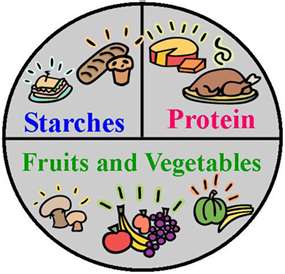
Last night I was teaching the plate method to patients.  This is a great tool that gives a visual on appropriate serving sizes and food groups at each meal.  Then as I was about to eat dinner, I realized I was practicing what I preach, which is to make half of your plate full of vegetables, one quarter for protein and the other quarter for the starch, then have a piece of fruit on the side and a dairy product. I had my apple a little later for a snack and didn't have the dairy, oops.  Anyways do what you can to follow the plate method because getting in all the food groups at each meal is key for optimal nutrition.  Watching serving sizes helps with weight control.  I had tofu, quinoa, and vegetables for my plate but of course you can have your favorite protein, starch and vegetables. 


And one last thing I'd like to share....

Thursday, February 16, 2012

The Can Can


First off, today is National Almond Day.  My very first post was about almonds and walnuts so check out the archives at the bottom of the home page in case you missed it to find out all the good these nuts have to offer.  I just thought I'd remind you to grab a handful of almonds today in honor of National Almond Day!!

February has a list of monthly food holidays.  One of which is Canned Food Month.  I know many people are told to steer clear of canned foods due to preservatives and particularly the high sodium content but sometimes canned foods really come in handy and are more affordable.  I buy canned beans though I have bags of dried ones in my cupboard.  It is just convenient. 

So when you are buying canned goods and if you are concerned with salt content, rinse the foods to remove some of the sodium.  You can rinse most canned vegetables using a colander.  You can also rinse canned fruit especially the ones soaked in heavy syrup.  Or look for fruit canned in its own juice.  Canned fruit such as mandarin oranges makes great snacks or yummy additions to salads. Rinsing canned beans is important not only to remove excess sodium but to also remove some gas-causing fiber.  Canned beans are full of protein and fiber and are great additions to salads, soups and side-dishes.

When choosing canned meats such as chicken or tuna, choose water-packed varieties.  The oil packed ones might offer great flavor but if you need to limit fat intake opt for the water-packed varieties. 

Canned soups can be a dinner saver when you are exhausted from a long day of work and just don't feel like cooking.  Heating a can of soup and pairing it with a hearty salad is a quick fix.  Also canned tomatoes make quick pasta sauces.  Pair with whole wheat pasta for a quick Italian meal.

Try to look for soups and other canned goods with no or low sodium content.  You can always add your own salt-free seasonings such as herbs and spices.  It is good to try and select foods with less than 140 mg of sodium per serving if you have heart conditions.  Foods with less than 300 mg of sodium per serving can fit into a reduced-sodium meal plan as well.  

Did you know canned soda has sodium?  So if you drink canned soda all day (which I hope you don't) make sure you account the sodium in your beverages as well.   

Check out the following from The Center for Science in the Public Interest - a GREAT list of healthier canned soups. 

http://www.cspinet.org/nah/decsoup.htm

Wednesday, February 15, 2012

Creative with Cucumbers


Who knew cucumbers did so much?  My friend emailed this to me last year and I thought it would be good to share.

1.   Cucumbers contain most of the vitamins you need every day, just one cucumber contains Vitamin B1, Vitamin B2, Vitamin B3, Vitamin B5, Vitamin B6, Folic Acid, Vitamin C, Calcium, Iron, Magnesium, Phosphorus, Potassium and Zinc.

2. Feeling tired in the afternoon, put down the caffeinated soda and pick up a cucumber. Cucumbers are a good source of B Vitamins and Carbohydrates that can provide that quick pick-me-up that can last for hours.

3. Tired of your bathroom mirror fogging up after a shower? Try rubbing a cucumber slice along the mirror, it will eliminate the fog and provide a soothing, spa-like fragrance.

4. Are grubs and slugs ruining your planting beds? Place a few slices in a small pie tin and your garden will be free of pests all season long. The chemicals in the cucumber react with the aluminum to give off a scent undetectable to humans but drive garden pests crazy and make them flee the area.


5 Looking for a fast and easy way to remove cellulite before going out or to the pool? Try rubbing a slice or two of cucumbers along your problem area for a few minutes, the phytochemicals in the cucumber cause the collagen in your skin to tighten, firming up the outer layer and reducing the visibility of cellulite. Works great on wrinkles too!!!

6.. Want to avoid a hangover or terrible headache? Eat a few cucumber slices before going to bed and wake up refreshed and headache free. Cucumbers contain enough sugar, B vitamins and electrolytes to replenish essential nutrients the body lost, keeping everything in equilibrium, avoiding both a hangover and headache!!

7. Looking to fight off that afternoon or evening snacking binge? Cucumbers have been used for centuries and often used by European trappers, traders and explores for quick meals to thwart off starvation.

8. Have an important meeting or job interview and you realize that you don't have enough time to polish your shoes? Rub a freshly cut cucumber over the shoe, its chemicals will provide a quick and durable shine that not only looks great but also repels water.

9. Out of WD 40 and need to fix a squeaky hinge? Take a cucumber slice and rub it along the problematic hinge, and voila, the squeak is gone!

10. Stressed out and don't have time for massage, facial or visit to the spa? Cut up an entire cucumber and place it in a boiling pot of water, the chemicals and nutrients from the cucumber with react with the boiling water and be released in the steam, creating a soothing, relaxing aroma that has been shown the reduce stress in new mothers and college students during final exams.


11. Just finish a business lunch and realize you don't have gum or mints? Take a slice of cucumber and press it to the roof of your mouth with your tongue for 30 seconds to eliminate bad breath, the phytochemicals will kill the bacteria in your mouth responsible for causing bad breath. 

12. Looking for a 'green' way to clean your faucets, sinks or stainless steel? Take a slice of cucumber and rub it on the surface you want to clean, not only will it remove years of tarnish and bring back the shine, but is won't leave streaks and won't harm you fingers or fingernails while you clean.

13. Using a pen and made a mistake? Take the outside of the cucumber and slowly use it to erase the pen writing, also works great on crayons and markers that the kids have used to decorate the walls!!

Tuesday, February 14, 2012

Quick and Easy Kid meals


Need some quick, easy, kid-friendly and nutritious recipes? Here are some fan favorites prepared in a healthy manner that will leave kids happy and satisfied!  Let your child choose the items and build it themselves.  Getting them involved is fun for both of you and may even help a "picky" eater eat more because they were somewhat in control of their own meal.  I may have included ingredients such as low-fat cheese for healthier options but if your little one is underweight and needs the extra calories, don't go light.  I also have a great handout from the Academy of Nutrition and Dietetics on 25 Fun and Healthy Snacks for Kids.  If you are interested, leave a comment on this blog with your email and I will send it to you.


1.) Pizza: Toast the bread then add the toppings and toast some more. (toaster ovens work great)


a. Crusts: choose whole wheat English muffins, whole wheat pitas, or whole wheat pre-made pizza crust


b. Sauce: any pasta or pizza sauce, sun-dried tomato paste, pesto, drizzle of olive oil, or hummus


c. Toppings: promote the veggies!! You can add any vegetables really, just let your child choose their favorites. Some ideas include: corn, artichokes, roasted red peppers, mushrooms, tomatoes, black olives, garlic, or left over veggies from a previous meal. Other good options include shrimp, smoked salmon, tofu, veggie burger, Canadian bacon, grilled chicken breast, turkey sausage, turkey pepperoni or turkey bacon, low-fat mozzarella cheese or feta cheese.


2.) Burgers -  doesn't have to be McDonalds


a. Burger: Frozen veggie burger, salmon burger, turkey burger or chicken burger (white meat only)


b. Bun: whole wheat bun, whole wheat tortilla, whole wheat pita pocket


c. Veggies: tomato slices, roasted red peppers, onions, pickles, baby spinach


d. Condiments: avocado, mustard, wasabi, hot sauce, ketchup, BBQ sauce, hummus, bean dip, salsa


3.) Bean Burritos


a. Spread fat free or vegetarian refried beans down the center of a whole wheat or corn tortilla. Top with salsa and sprinkle with low-fat cheese. Add leftover chicken or any other lean meats or seafoods as well as fresh salsa and diced avocado. Roll it up and enjoy! Dip in non-fat plain Greek yogurt instead of sour cream.


4.) Quesadilla


a. Place a whole wheat or corn tortilla in a skillet and top with a small amount of low-fat shredded cheese. Add other toppings such as drained and rinsed canned beans, leftover chicken, shrimp, tofu or ground turkey meat, diced onions, bell peppers, mushrooms, corn, salsa. Fold in half and cook until the cheese is melted. Dip in non-fat plain Greek yogurt. You can also make these in the oven on a cookie sheet.


5.) Soup, Salad, and Bread (or a ½ of a sandwich or fruit)


a. Choose a healthy soup option such as lentil, black bean, split pea, minestrone, tomato, and butternut squash. Choose soup with less than 500 mg of sodium and 3 grams of fat per cup. Trader Joes, Amy’s and Imagine Natural Organics are good brands.


b. Pair with a salad from a pre-washed salad bag, top with your favorite salad toppings and dressing.


c. Add whole grain crackers and cheese, warm whole grain bread and hummus, a bowl of fruit or a half of your favorite sandwich.


*** For more fun ideas, check out these sites (the first two are awesome!!)
 
http://blog.superhealthykids.com/
 
http://kidshealth.org/kid/recipes/index.html
 
http://familyfun.go.com/recipes/
 
http://www.eatingwell.com/recipes_menus/collections/healthy_eating_kids

Monday, February 13, 2012

How about some Medical Nutrition Therapy? KIDNEY STONES


Just one more reason to drink more water....

Kidney stones are very common and often run in families. There are different types of kidney stones which depend on the cause of the stone. A kidney stone is a solid mass made up of tiny crystals and more than one stone can be in the kidney or ureter at the same time. Kidney stones form when urine contains too much of certain substances which create crystals that become stones. They take weeks to months to form.  I thought since kidney stones are fairly common, this would make a good blog post. 

DIFFERENT TYPES OF STONES:

Calcium stones are the most common, especially those between the ages of 20-30. Calcium combines with oxalate, phosphate, or carbonate to form the stone. Oxalate can be found in foods like spinach or vitamin C supplements. Also small intestinal diseases (celiac, crohn’s, cancer, IBS, obstructions and ulcers) increase your risk of these stones.
People with cystinuria form cystine stones. This disorder runs in families from a faulty gene being passed along that interferes with cystine’s normal ability to dissolve and go back into the blood stream. So it will build up to form crystals/stones.

Struvite stones mostly affect women with urinary tract infections and the stones grow very large.

Uric acid stones are more common in men and occur with gout or chemotherapy.
Other substances that can form stones include the medications acyclovir, indinavir and triamterene.

DIET TIPS WHILE EXPERIENCING KIDNEY STONES:

The biggest risk factor for kidney stones is not drinking enough fluids and are more likely to occur if you make less than 1 liter of urine a day. The best fluid choice, of course is water!! You can also drink ginger ale, lemon-lime sodas and fruit juices. Drink enough to make at least 2 quarts of urine a day or to have light-colored urine. Limit your coffee, tea and dark cola to one to two cups a day. Caffeine may cause you to lose fluid too quickly which results in dehydration.  You might as well drink lemon water for added benefits - learn more from a recent blog post.  Some other things you can do:

• Eat less salt

• Have only 2-3 servings of calcium rich foods (milk, cheese, yogurt, oysters, tofu)

• Eat more lemons, lemonade, and oranges

• Limit protein and choose lean meats

• Follow a low-fat diet

• Do not take calcium or vitamin D supplements or antacids

• Vitamin C supplementation and fish oil could also be harmful (ask your doctor)

• Limit foods high in oxalate: fruits – rhubarb, currants, canned fruit salad, strawberries, concord grapes; vegetables – beets, leeks, summer squash, sweet potatoes, spinach, tomato soup; drinks – tea and instant coffee; other – grits, tofu, nuts, chocolate

• Avoid these if you have uric acid stones: alcohol, anchovies, sardines, oils, herring, organ meat, legumes, gravies, mushrooms, spinach, asparagus, cauliflower, consommé, baking or brewer’s yeast; other suggestions include to not eat more than 3 ounces of meat at each meal, avoid fatty foods and eat enough carbohydrates. Also quick weight loss may cause uric acid stones to form.

SYMPTOMS:

• severe pain that can start suddenly then go away suddenly and could move to groin area.

• Abnormal urine color or blood in the urine

• Chills

• Fever

• Nausea and/or vomiting

TESTING FOR KIDNEY STONES:

• Blood tests to check calcium, phosphorus, uric acid and electrolyte levels

• Kidney function tests

• Urinalysis to look for crystals and red blood cells

• Examination of the actual stone

• Stones/blockages can be seen on abdominal CT scans, MRI, x-ray, intravenous pyelogram, ultrasound, and retrograde pyelogram

TREATMENT:

• Depends on the type of stone

• Small stones can pass on their own – stone should be saved and tested to determine type of stone

• Drink 6-8 glasses of water/day to produce large amounts of urine

• Over the counter pain relievers or if it is severe, may need to stay in the hospital and receive fluids intravenously

• Medications may be prescribed to decrease stone formation or help break it down and remove the material causing the stone

• Surgery may be needed if the stone is too large to pass, the stone is growing or blocking urine flow, or the pain can’t be controlled

• Extracorporeal shock-wave lithotripsy uses waves to break up the stone

• Percutaneous nephrolithotomy is used for larger stones removed by a tube that is inserted into the kidney

• Ureteroscopy can be used for stones in the lower urinary tract

• Rarely, open surgery – nephrolithotomy may be needed if other methods do not work

Sunday, February 12, 2012

More talk about APPLES


Friday I talked about the health benefits of apples. Today I am going to provide some great websites with tons of delicious recipes using apples in every meal.

 
http://www.eatingwell.com/recipes_menus/collections/healthy_apple_recipes


http://www.applerecipes.us/

 
http://southernfood.about.com/cs/apples/a/apple_recipes.htm


http://www.foodnetwork.com/topics/apple/index.html


http://allrecipes.com/recipes/fruits-and-vegetables/fruits/apples/


Here are some fun APPLE facts:

 
• Apples contain 80-85% water


• Apples are a member of the rose family


• Apples float because 25% of their volume is air


• Apples ripen six to ten times faster at room temperature than if they were refrigerated


• A peck of apples weighs 10.5 pounds and a bushel weighs about 42 pounds and this yields 20-24 quarts of applesauce


• Archeologists have found evidence that humans have been enjoying apples since at least 6500 BC


• After oranges, apples are the second most valuable fruit grown in the US


• All apples have five seed pockets, each with a seed


• A medium apple is about 80 calories


• Hand picking is still the most common way of gathering apples


• It takes four to five years before the apple tree produces its first fruit


• It was the favorite fruit enjoyed by ancient Greeks and Romans


• Apples can be grown farther north than most other fruits as they blossom in late spring, minimizing frost damage


• It takes the energy from 50 leaves to produce one apple


• One apple has 5 grams of fiber and are a great source of the fiber pectin


• One of the oldest varieties is The Lady or Api


• One gallon of apple cider takes about 36 apples


• Pomology is the science of growing apples


• Throughout the world, there are 7,500 varieties of apples


• The sugar content of a fresh apple varies from 6 to 10 percent


• The largest apple picked weighed three pounds


• 39% of apples are processed into apple products of which 21% is for juice and cider


• Varieties can range in size from as large as a grapefruit to as small as a large cherry